
 John Crow
Selling your business is one of the biggest financial decisions you’ll ever make. Whether you own a family-run HVAC company, a group of restaurants, or a growing software startup, the process can feel overwhelming. The good news? With the right plan, the right team, and the right legal help, you can walk away with peace of mind and the best deal possible.
This guide breaks the process into clear steps, using real-world Nashville examples to help you picture how it works.
Step 1: Decide What You’re Actually Selling
When you sell your business, there are usually two ways it can be done:
Selling the assets: The buyer purchases the things that make up your business: equipment, customer lists, contracts, and goodwill. Think of this as selling the “pieces” of your business.
Selling the company itself: The buyer takes over the entire company, including any debts, leases, or legal obligations.
Why it matters:
- Selling assets is often cleaner for the buyer, but more complicated for you because you’ll need to retitle vehicles, transfer contracts, and settle taxes.
- Selling the whole company may be simpler, but the buyer inherits everything, including any problems.
- An attorney can help you weigh which structure makes the most sense for your goals, taxes, and timeline.
Step 2: Get Your Business “House in Order”
Buyers pay more and close faster when a business looks organized. Before you put your business on the market:
- Clean up your financials: Work with your CPA to prepare accurate tax returns and financial statements. Remove personal expenses from business records.
- Review your contracts: Check if your agreements with customers or vendors require consent before transferring.
- Focus on employees: Buyers want to know key team members will stay. Consider offering retention bonuses.
- Handle legal housekeeping: Renew licenses, pay overdue taxes, and resolve disputes before buyers find them.
Step 3: Build the Right Team
Even small businesses benefit from an experienced team guiding the sale:
- A business attorney who focuses on business sales and mergers.
- A CPA or tax advisor to help with financial reporting and tax planning.
- A business broker or banker to connect you with buyers and negotiate terms. Smaller companies often use brokers, while larger ones may use investment bankers.
Step 4: Find the Right Buyer
There are two main types of buyers:
Strategic buyers: Other businesses in your industry looking to grow by acquiring your business. For example, a larger HVAC company buying your HVAC company.
Financial buyers: Investors or private equity firms that buy businesses, grow them, and eventually resell them.
Each type of buyer has different priorities. Strategic buyers may pay more because they can use your company to grow immediately. Financial buyers may want you to stay on for a while or roll some of your ownership into the new company.
Step 5: Negotiate the Letter of Intent (LOI)
Once you have a serious buyer, you’ll receive a Letter of Intent (LOI). This short document sets the framework for the deal. While not the final agreement, it covers key details such as:
- The price and how it will be paid (cash, payments over time, or a mix).
- What exactly is being sold (assets, stock, or both).
- Any “earn-outs” (extra payments if the business hits certain goals after the sale).
- Exclusivity – how long you agree not to talk to other buyers.
- The LOI keeps everyone aligned before the buyer invests time and money into due diligence.
Step 6: Due Diligence
This is when the buyer reviews your business in detail. Expect them to ask for:
- Financial records, including tax returns, statements, and payroll.
- Customer and vendor contracts.
- Employment agreements and benefit plans.
- Licenses, permits, and regulatory filings.
- Details on any loans or debts.
Be organized. A clean and well-prepared set of documents builds confidence for the buyer and keeps the business transaction moving.
Step 7: The Purchase Agreement
The purchase agreement is the binding contract that finalizes the deal. It includes:
- The purchase price and how it will be paid.
- Promises you make about your business, known as “representations and warranties.”
- What happens if something goes wrong after closing.
- Restrictions on your future actions, such as non-compete or non-solicit agreements.
In Tennessee, non-compete laws are still enforceable, but are evolving, so buyers may rely more on confidentiality and non-solicitation agreements instead.
Step 8: Closing the Sale
The final step includes:
- Signing all contracts.
- Filing required paperwork with the Tennessee Secretary of State.
- Paying off loans or liens.
- Filing a final sales tax return with the Tennessee Department of Revenue.
- Once complete, ownership officially transfers, and you get paid.
Example 1: Selling a Nashville HVAC Company
John owns a Nashville HVAC business with 20 employees and $5 million in annual revenue. A regional company wants to expand into Middle Tennessee and offers to buy his business.
The buyer only wants the assets—trucks, equipment, contracts, and goodwill. John’s lawyer helps secure customer approvals for contracts that don’t automatically transfer. His CPA negotiates the tax treatment so John pays less in capital gains tax. The buyer holds back 10% of the purchase price for one year in case of any hidden issues.
Result: John walks away with mostly cash, keeps the building he owns (which he rents to the buyer), and retires comfortably.
Example 2: Selling a Nashville Healthcare Software Startup
Sarah built a healthcare analytics software company in Nashville. A national healthcare IT company wants to acquire it.
The buyer purchases Sarah’s entire company instead of just the assets. This way, customer contracts don’t have to be re-signed. Sarah agrees to stay on for two years to help with the transition. Part of her payment comes in stock in the buyer’s company, giving her future upside. Instead of a strict non-compete, Sarah signs non-compete, confidentiality, and non-solicitation agreements, which are enforceable in Tennessee.
Result: Sarah receives an upfront payout, retains a long-term equity stake, and ensures her employees and customers are supported.
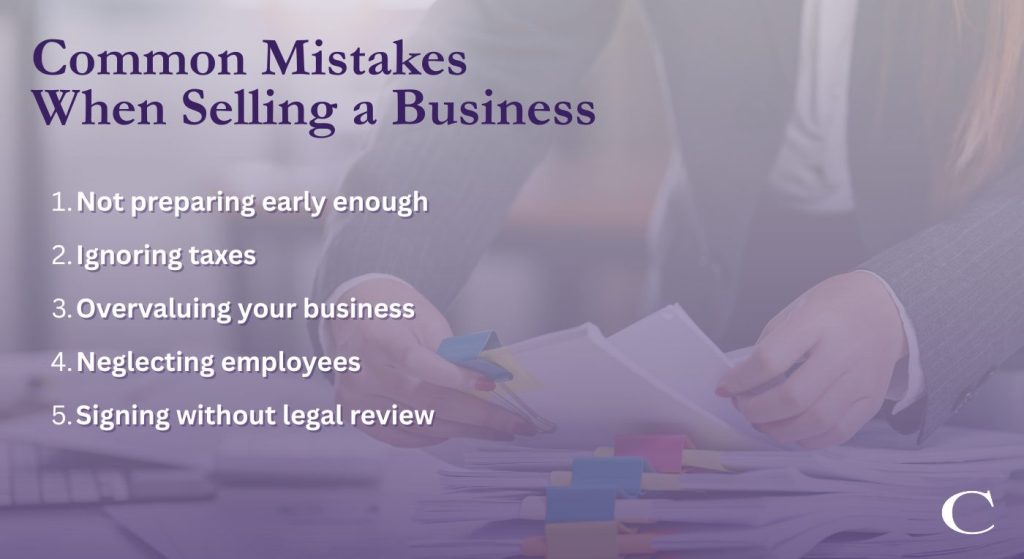
Common Mistakes to Avoid When Selling a Business
-
Not preparing early enough. Start at least a year before you want to sell.
-
Ignoring taxes. The deal structure can add or save thousands.
-
Overvaluing your business. Buyers pay based on profits, not potential.
-
Neglecting employees. Key departures can lower your sale price.
-
Signing without legal review. Even simple deals can hide risks.
Why Nashville Is a Seller’s Market
Nashville is one of the hottest business markets in the country. The booming healthcare industry, rapid population growth, and a strong startup scene make it attractive to buyers nationwide. More competition for your business often means a higher sale price if you prepare properly.
Final Thoughts
Selling your business is more than a financial decision, it’s a major milestone. With the right planning, you can maximize your value, protect your employees, and transition smoothly. Having a trusted attorney and CPA by your side ensures you avoid pitfalls and walk away with peace of mind.
Ready to Sell Your Business in Nashville?
At Crow Estate Planning & Probate, PLC, we guide Nashville business owners through the sale process from start to finish. From structuring the deal and protecting your employees to minimizing taxes and negotiating the best terms, we make sure your hard work pays off.
If you’re thinking about selling your business, or just want to start planning, contact Crow Estate Planning today. Let’s protect the legacy you’ve built and help you take the next step with confidence.
About the Author
With nearly two decades of legal experience, John advises individuals and families on wills, trusts, probate matters, and complex inheritance disputes. His practice includes both practical estate planning for families seeking clarity and peace of mind and sophisticated planning for high-net-worth individuals involving advanced trust structures and asset protection strategies.
Over the course of his career, he has helped hundreds of families plan their estates, administer probate estates, and resolve contested inheritance matters.
John earned his Bachelor of Arts in History with honors from Vanderbilt University and his Juris Doctor from Cumberland School of Law at Samford University. He is based in Clarksville, Tennessee and works with clients throughout Middle Tennessee and Western Kentucky. Learn More.
Licensed in Tennessee and Kentucky