Planning Your Estate To Avoid Taxes

When it comes to putting an estate plan together, there are several taxes that you should be aware of:

  • Federal Estate Tax
  • Federal Gift Tax
  • Generation Skipping Tax
  • Inheritance Tax
  • Capital Gains Tax

Each of these taxes are explained more in detail if you scroll down, but let’s start off with a brief overview of taxation and your estate plan.

Overview of the Current Tax Landscape

There is good news and bad news when it comes to estate tax planning. The good news is that currently we have perhaps the best federal estate tax laws we have ever had as a nation. Exemptions are at all all time high and each they continue to grow. Under the current tax laws, 99% of Americans have no federal death tax at their death. Added to that, beginning in 2016, the State of Tennessee eliminated the Tennessee Inheritance Tax which means if you are a Tennessee resident at your death, there is an extremely high likelihood you and your family will not be taxed at your death.

The bad news is that tax laws change with the political winds. Estate planning attorneys will tell you to plan for your estate now using the current laws. Yet you need to be aware of the political climate in Washington, D.C. and Nashville. Federally, the current estate tax law is set to expire in 2026 unless Congress acts before that time. What that means is that without Congressional action the very high exemptions we currently have now will be cut in half. Additionally, while no one anticipates the Tennessee General Assembly to make any significant changes to state law, the political climate in Nashville is worth keeping an eye on.

Our goal at Crow Estate Planning and Probate is to not only keep you informed of the ever changing estate tax laws, but to partner with local certified public accountants who can assist you with your overall tax strategy. Whether you need tax planning for your small business or just have a question about the tax consequences of a transaction, give our Clarksville office a call and tell us about your situation. We want to help.

Federal Estate Tax

So what is the estate tax? Simply put the estate tax is a tax on the total value of the assets of the individual who passed away. Due to the fact that the estate tax is only triggered at death, this type of tax earned the synonym “the death tax.” The estate tax is one of the most unpopular taxes because many see it as double taxation: you pay income taxes on money you earn during your life and then the government taxes it again at your death. On the other hand, many proponents of the estate tax see it as a necessary tool that we use to level the playing field and redistribute accumulated wealth.

Whatever your political stance on the estate tax it is likely here to stay. While half of Congress wants to repeal the tax, the other half does not. Due to the regular political shifts in Congress and the Presidency, even if this tax was temporarily repealed, it is unlikely to ever be permanently repealed. As such, it is a prudent idea to plan for it being a long lasting fixture of American taxation.

Although we have an estate tax, the good news is that in 2020 you must have over $11.58 million to have an exposure to the tax. What this means is that if you have under $11.58 million you will not pay any estate tax to the federal government. Additionally, Congress has allowed married couples to combine their exemptions through what is called “portability” to obtain an exemption of over $23 million.

As a consequence of these high exemptions, 99% of Americans are exempt from having to pay any sort of federal estate tax. If we take a look back at the late 1990s for example this is a massive relief for the taxpayer. For example, in 1999, just 20 years ago, the estate tax exemption was set at $650,000 and had a high rate of 55%. What that means is that if you were a single person and had a $2 million estate in 1999, your estate would have received a tax bill of $742,000! But now, thanks to the extremely high exemptions, most Americans have little to fear about this tax.


Currently, there are twelve federal estate tax rates for the first million over the exemption. Anything over $1 million is taxable at the highest estate tax rate of 40%. So if you are a single person and have an estate valued at over $11.58 million your estate will be taxed at 40% above the exemption.

Person filling out and signing inheritance tax papers.

Tennessee Inheritance Tax

In January 1, 2016, Tennessee completely repealed its inheritance tax. So if a loved one died in 2016 or after, there is no inheritance tax owed. But if an individual passed away in 2015 or earlier, there could be inheritance tax obligation. The amount of the tax, if any, would depend on the value of the estate of the individual who died. For example in 2015, there was a $5 million exemption. As such, anything assets under that number would not have inheritance tax exposure.

Be aware that there is a difference between the federal estate tax and a state inheritance tax. The estate tax is enacted by Congress and covers all 50 states. By contrast, inheritance taxes are enacted by the states and only over individuals who were residents of that state or owned property in that state. To be clear, there is no federal inheritance tax, but many people use terms inheritance tax and estate tax interchangeably.

Read MoreLess

Gift Tax

For many of us, giving gifts is important. We want to help our children succeed or be able to directly provide for those in need. Many people also make gifts to reduce their estates to minimize any exposure to the death tax when they pass away. Whatever the motivation, you need to be aware of the gift tax as making gifts is not quite as easy as it sounds.

Under the current tax code, all Americans have a “unified credit” or “lifetime exemption” that they may use during their lifetime or at their death. In 2019, the amount of this unified credit is $11.4 million per individual. What this means is that if you want to give away all your assets that are under $11.4 million you can do so and avoid any tax consequences. However, you do need to report the gift to the IRS using Form 709 if the gift is over $15,000 to any individual.

Here is an example: Let’s say Lisa wants to give her daughter Beth $100,000. Lisa can make this gift without any tax consequences by using some of her lifetime exemption of $11.4 million. Beth could go ahead and make the gift and then file a Form 709 gift tax return telling the IRS that she has used some of her lifetime exemption to make the gift tax free.

Individuals may give up to $15,000 tax free to an infinite amount of persons without having to report the gift to the IRS. So if you wanted to give your nephew $1,000 you can do so with no complications. Additionally, gifts directly to medical providers and educational institutions are always tax free no matter the amount. So if you wanted to pay for your child’s college tuition, room and board, or hospital bill there are no gift tax consequences as long as you pay the provider.

However, be aware that gifts of over $15,000 to any individuals can potentially trigger a gift tax if not properly reported to the IRS and the IRS discovers the gift. Currently, the highest gift tax is 40%. So if you are planning to make a gift or if you have made one in the past, be sure you speak with an Clarksville estate planning attorney or CPA to discuss filing your gift tax return.

Generation Skipping Tax

The generation skipping taxes apply when you give assets to family member that is a generation younger than you are, such as your grandchildren. This tax also applies when you give assets to a non-relative who is 37.5 years younger than you are. Currently, the generation skipping tax exemption is set at $11.58 million so it does not effect many people, but it is still something to be conscious of when planning your estate.

The generation skipping tax arose out of a problem that the federal government faced when wealthy individuals would attempt to bypass successive estate taxes generation after generation. The way the estate tax is designed is that parents would leave assets to a child and then pay an estate tax. The child would then leave assets to grandchildren and then the assets would be taxed again. So to avoid this, estate planners decided to skip a generation to avoid one level of estate tax. Rather than giving everything to a child outright, they would give it to grandchildren, thereby preserving the value of the assets by skipping the children and that round of estate tax. To cure this problem, Congress imposed the generation skipping tax. They essentially said, if you want to give money to your grandkids, fine, but we are still going to tax you if that transfer is over a certain amount.

Don’t Fret Too Much Over the Generation Skipping Tax

Due to the high exemptions of the generation skipping tax it is not a major concerns for most Tennesseans. When the exemptions were much lower, the most common concern we saw with generation skipping taxes was when a grandparent gave a grandchild a significant amount of money outright or in trust. This type of scenario can still trigger the generation skipping tax but the bequest would have to be over $11.58 million, unlikely for most of us.

Capital Gains Tax and Estate Planning

You might be wondering: What does the capital gains tax have to do with estate planning? The short answer is making gifts of stocks, real estate, or other assets can have significant long term capital gains tax implications. Consider the situation below:

One of the most common questions we get is whether it is a good idea to add a child’s name to a deed. The reason most people ask this question is that they want their children to inherit the house with no complications of probate or they want their children to care for their property when they are unable to do so. Makes sense, right? While you certainly can add your child’s name to the deed, it may not be the best idea. Here’s why:

  • Gift tax complications
  • Loss of step up in tax basis

When you put your child’s name on your deed, it is considered a gift by the IRS and can be subject to the gift tax. Here is an example: Glenn has a $100,000 home that is paid for. He decides to add his daughter, Samantha, to the deed. When Glenn adds Samantha to the deed he makes a gift. Glenn would then need to prepare and file a Form 709 gift tax return on his taxes for the calendar year in which he made the gift to avoid any gift tax complications. By filing this form he is telling the IRS that he is using a portion of his lifetime exemption to make the gift tax free.

Now let’s say that Glenn wants to completely gift the house to Samantha. Glenn bought the house for $10,000 in 1989. That number is considered his “tax basis”, or essentially what he paid for something. Thirty years later, the house is worth $100,000. If Glenn sells the house he has a capital gain of $90,000. If Glenn gifts the house to Samantha outright, Samantha would inherit Glenn’s tax basis of $10,000 and incur a significant capital gains tax if Samantha sells the property. However, if Glenn holds the house until his death, Samantha would be able to inherit a step-up or “bump up” in tax basis to the market value of the house at Glenn’s death. So if the house is worth $100,000 at Glenn’s death and Samantha decided to sell the house at $120,000, the she would only have to pay capital gains tax on $20,000 instead of $110,000, significantly less amount. This would save Samantha thousands of dollars in tax.

The bottom line regarding gifting assets is to be aware of the capital gains consequences. Gifts of real estate, stocks, and other investments carry significant, unintended capital gains consequences if not planned properly.

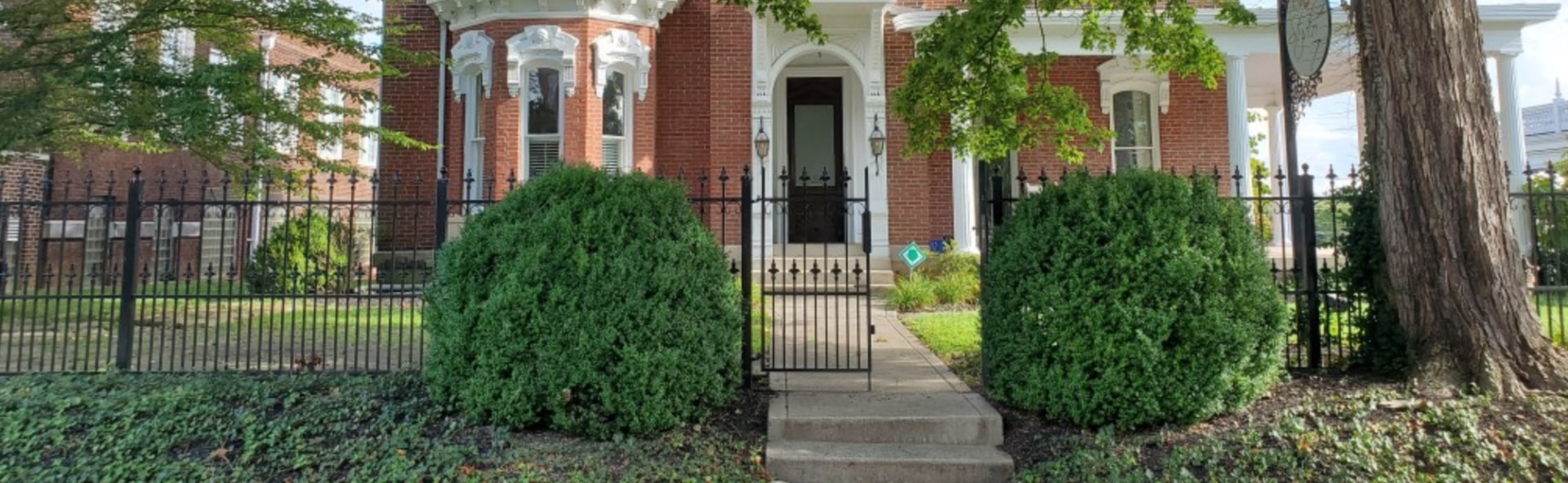
The front of the Crow Estate Planning & Probate red brick building located in Clarksville, Tennessee.
GET IN TOUCH

Have Estate Tax or Gift Tax Questions? Tax Attorney John Crow Can Help.

Tax planning can be complicated and complex. If you have questions regarding potential tax consequences of certain gifts give us a call and we can help answer your questions.

Contact Us 931-218-7800
A high-angle, wide-view landscape of a city skyline with various commercial buildings and rooftops during the day.

Get in Touch With Us

Please fill out the form and someone will be in contact with you as soon as possible.

    In-PersonVideo CallTelephone Call

    Never share sensitive information (credit card numbers, social security numbers, passwords) through this form.. This site is protected by reCAPTCHA and the Google Privacy Policy and Terms of Service apply.

    Latest News

    View all posts
    Aerial image of the city of Clarksville, TN.

    Hear From Our Clients

    Krystal Rivas

    I had a great experience with Crow Estate Planning & Probate! They made a complicated process feel simple, took the time to explain everything clearly, and were incredibly professional from start to finish. I felt supported and confident every step of the way. Highly recommend!

    Emily Richardson

    I had a great experience working with Crow Estate Planning and Probate. They made the entire process of writing my will feel simple, organized, and far less overwhelming than I expected. From start to finish, they were professional, patient, and very knowledgeable. They took the time to clearly explain everything and made sure all of my questions were answered, which gave me a lot of peace of mind. I truly appreciated how smooth and efficient the process was, while still feeling very personal and thorough. I would highly recommend them to anyone looking for help with estate planning!

    Steve Baker

    I can’t say enough about Crow Estate Planning & Probate. They did an excellent job explaining and drafting my estate plan. I would highly recommend.

    David Sweatt

    Professional above all expectations. Every question asked answered to understanding. Took time to tailor my request to the exact detail. Documents were explained to the details there in before signing. Super friendly and not showing sign of disconcerting attitude. I respect this firm and they have my “complete” trust.

    Ute Bennett

    We are very happy with the services provided and will recommend to family and friends.

    Donald Hutcherson

    The Crow law firm was absolutely wonderful from start to finish.the entire team was professional, knowledgeable and courteous. Above all they were absolutely caring in helping me through a difficult time. I highly recommend this law firm.all my needs were taken care of and were handled in a timely manner…I am forever grateful.

    Bill Boyd

    Where do I begin? I truly can’t say enough nice things about Crow Estate Planning & Probate and Alexandra Hulme, without her and everyone around her, I can truly say I don’t know where I would be today. Like many after losing my mother, I was lost, in a dark place and things weren’t happening how my mother had planned in her trust and will. Before waiting too long, I retained Alexandra’s services and she took me through the process step-by-step. Something that I never thought I could afford or I’d have to do. She knew I wasn’t asking her to do anything more than complete my mother’s last wishes. She did just that. They did it because they’re passionate about what they do. Communication was A+. She never left me hanging. I know family means a lot to her/them. I am indebted to her and these people forever. If you need help, call her today. I promise you won’t be disappointed. Thank you Alexandra from the bottom of my heart.


    Travis Henry

    I was referred to John by a fellow real estate investor when I needed guidance on structuring a couple of LLCs. From the start, he made the process incredibly smooth and straightforward. John was consistently responsive, thorough in his explanations, and showed a genuine commitment to getting everything completed on time—even working late to accommodate my schedule while I was operating from Hawaii, several time zones away. His mix of professionalism, attention to detail, and approachable demeanor made the entire experience seamless. I’m grateful to have him as a resource and wouldn’t hesitate to recommend him to anyone looking for a reliable and knowledgeable attorney.


    Andre Christophe

    Bridget and Thomas were very professional and knowledgeable in responding to my needs. Also, they were very organized and easy to work with. 


    Allen Moser

    This firm has done several things for me and real estate clients. Most recently setting up a TIST (Tennessee Investment Services Trust). And redoing my Will, Medical Power of Attorney, and Healthcare Directive. Appreciated their understanding of all of the intricacies of each document. Their timely communication and prompt service.


    Our Locations

    Clarksville

    512 Madison St Suite A, Clarksville, TN 37040

    931-218-7800
    Nashville

    1503 16th Ave S,
    Nashville, TN 37212

    615-558-8002
    Franklin

    321 Billingsly Court Suite 20, Franklin, TN 37067

    (615) 996-1400
    Hopkinsville

    203 E 9th St,
    Hopkinsville, KY, 42240

    270-569-0006
    Springfield

    719 S Main St Suite 110, Springfield, TN, 37172

    615-914-2184
    Chattanooga

    736 Georgia Ave Suite 504, Chattanooga, TN 37402

    (423) 709-5401